

Taipei Trans March 2026: From Humble Beginnings To Big Crowds
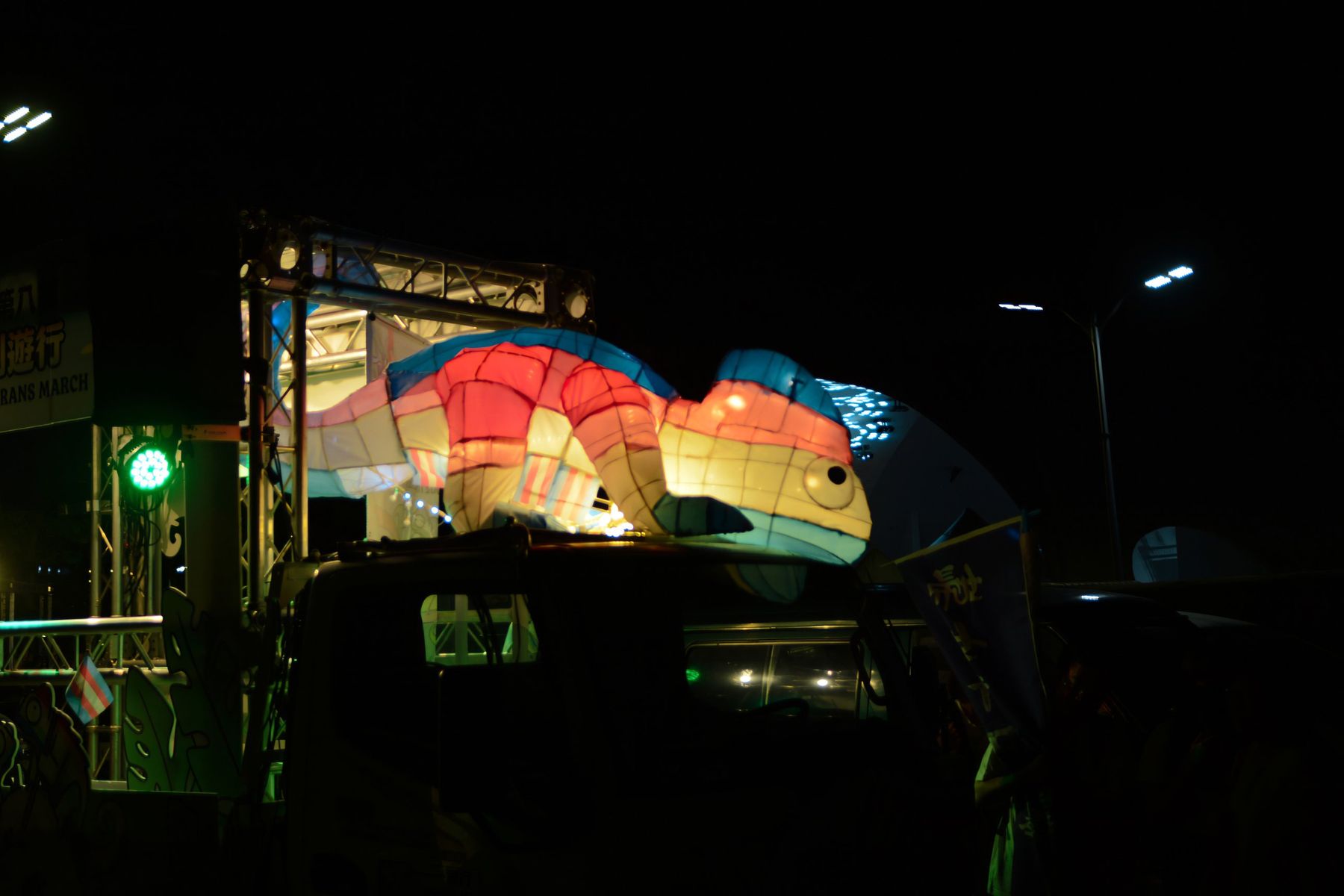
Thousands of people attended the 8th Taiwan Trans March, gathering in 228 Peace Park before marching through Ximending.
Since 2019, the Taiwan Trans March has taken place on the same weekend as the larger Taipei LGBT+ Pride event to raise awareness specifically for trans visibility.
Organised by Taiwan Tongzhi (LGBTQ+) Hotline Association, the event now routinely attracts around 4,000-5,000 attendees, having grown rapidly since its inception 7 years ago.
This year’s iteration opened with performances at 228 Peace Park’s open-air auditorium. These began at 18:30 before attendees began marching through the Ximending area at 19:30. The march returned to 228 Peace Park at 21:00, followed by the closing ceremonies running until 21:30.


Origin
In 2019, Taiwan became the first Asian country to legalise same-sex marriage. Unsurprisingly, this milestone was widely celebrated across the world.
However, those working on LGBT+ rights knew that landmark moments such as these often provoked a backlash amongst those hostile to the queer community’s progress. For instance, Hotline knew that in previous instances in Europe and America the legalisation of same-sex marriage was frequently followed by an increase in attacks on the trans community particularly.
A number of factors meant that Hotline were uniquely well-positioned to work to prevent this pattern repeating in Taiwan. They had been working with the trans community since 2010 to help raise awareness and understanding.


Moreover, they had attended the 2018 Amsterdam Trans Pride Walk and been reassured by the relatively small crowd (around 100-200 people). The realisation that even a small event could be powerful inspired them to organise Taiwan’s first Trans March the following year. Rather than measuring themselves against the more established Pride, the important thing was “people showing up, so society can see us and we can raise visibility”, as Hotline’s Yuàn Měi-Yíng (阮美嬴) said.
In fact, the event was immediately well-received, attracting around 1,000 attendees to its very first iteration. Within a few years, the event outgrew its initial location in Ximen and moved to its current home at 228 Peace Park. Close enough to still march to Ximending, this new location has the added benefit of a large stage.
This expansion in scale has meant the march has gradually become a major logistical challenge. As such, around half of Hotline’s staff (6-7 individuals) will begin working on the march’s organisation immediately following Lunar New Year (around the beginning of March), approximately 8 months before the event itself. In November, the entire office (around 14 people) will be working on it, a task which includes training 100 volunteers.


Other indications of the event’s growth include the incorporation of business partners 4 years ago. For instance, certain shops and bars will offer attendees of the march special offers afterwards. The hope is that in the years to come these collaborations will continue to multiply, particularly with ally organisations from outside the community.
This year
Whilst the march has certainly grown in scale, it remains small enough to feel personally connected to the community. As Yuàn Měi-Yíng (阮美嬴) says, the reduced scale compared to Saturday’s Pride “allows people to really connect with the people participating in that march. This means more communication, because it’s easier to see your slogan and what you want to say.”
Prior to the event, there were fears of potential trouble due to the planned route being in the vicinity of the police precinct which had raided Commander D, a popular gay bar, last month. In fact, such fears are an annual occurrence, though their cause usually varies somewhat. Last year for instance, transphobic comments made by an organiser of Pride also resulted in an unusually tense atmosphere.

According to Yuàn Měi-Yíng’s measure of success – that “people show up and we can march peacefully” – this year’s event, like all its previous iterations, was most certainly a success.
Miya Hoshino and Fei Fain ably hosted the opening and closing performances. The show began with an exhilarating performance by Thailand’s Alcazar Cabaret Show. Bedecked in gorgeous red and satin outfits, their brilliant choreography set the tone for the night.
As well as speeches by those connected to the event, including representatives from Japan, the pre-march build-up also featured a performance by Pia Wu, winner of this year’s Golden Melody Award for Best Taiwanese Female Singer.

Whilst the crowd had been relatively reticent during the performances, they livened up during the march itself. A hubbub of friendly discussion accompanied by the occasional chant was the soundtrack to proceedings.
Now that the crowd had gone from being the audience to the main event, it became apparent quite how diverse its composition was. All ages – from young families to older school children to more elderly members of society – were represented. Similarly, the range of languages one could overhear was testament to the impressively international nature of the crowd.
Unsurprisingly, as the procession advanced through the roads of Ximending, it attracted lots of attention from passersby. Many took photos or videos, and any gestures of support (e.g., waving a Pride flag or beeping a car horn) were greeted with appreciative cheers from the crowd.
Finally, the procession returned to 228 Peace Park for the closing ceremony. As well as a number of speeches, Nymphia Wind, the 2024 winner of RuPaul’s Drag Race, delivered a fittingly fabulous end to the night with a wonderful performance.